
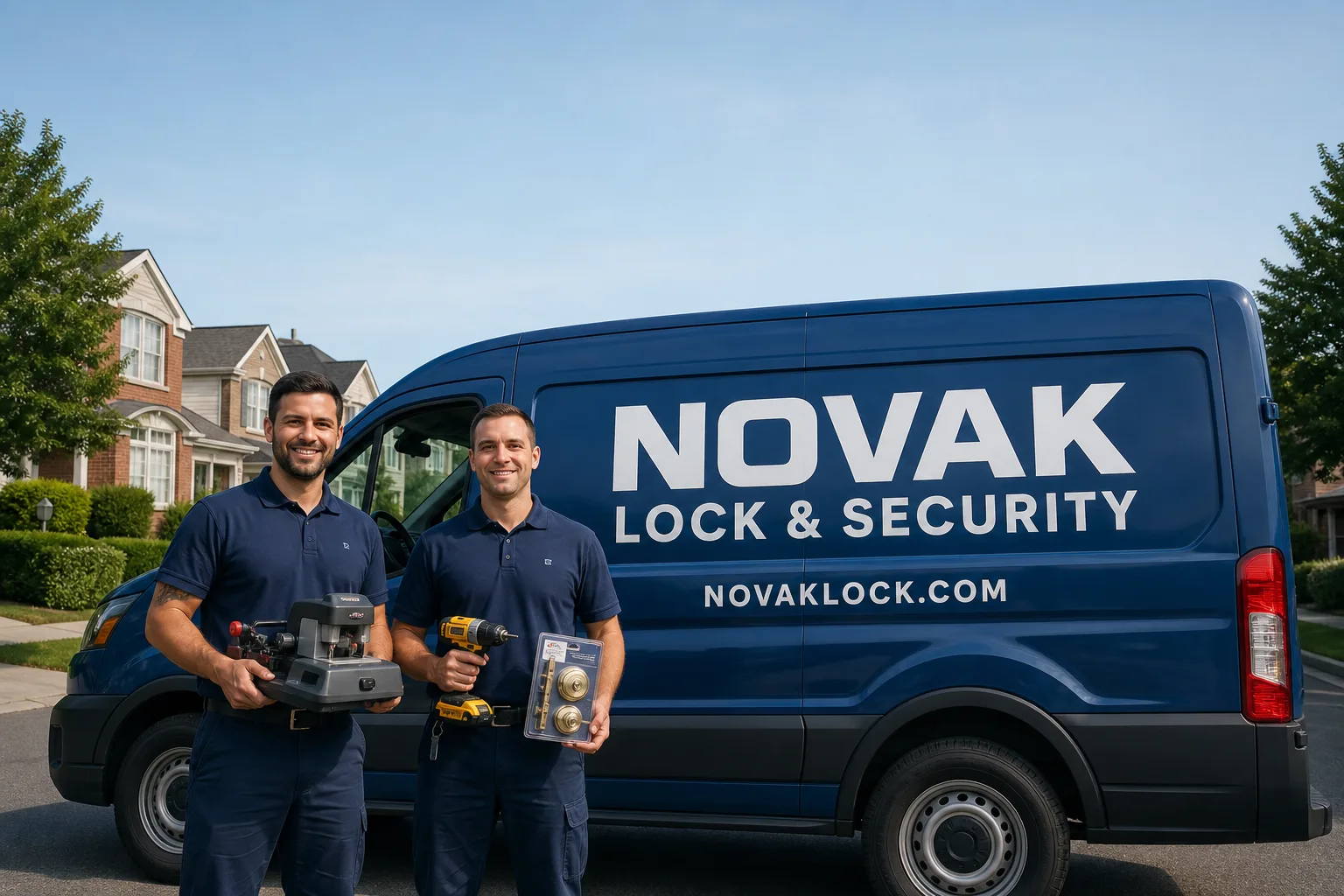
Non-destructive entry first, always - and we re-key Schlage, Kwikset, and Baldwin locks on the spot while you watch
You get a price before we start. It does not change when we arrive. No surprises.
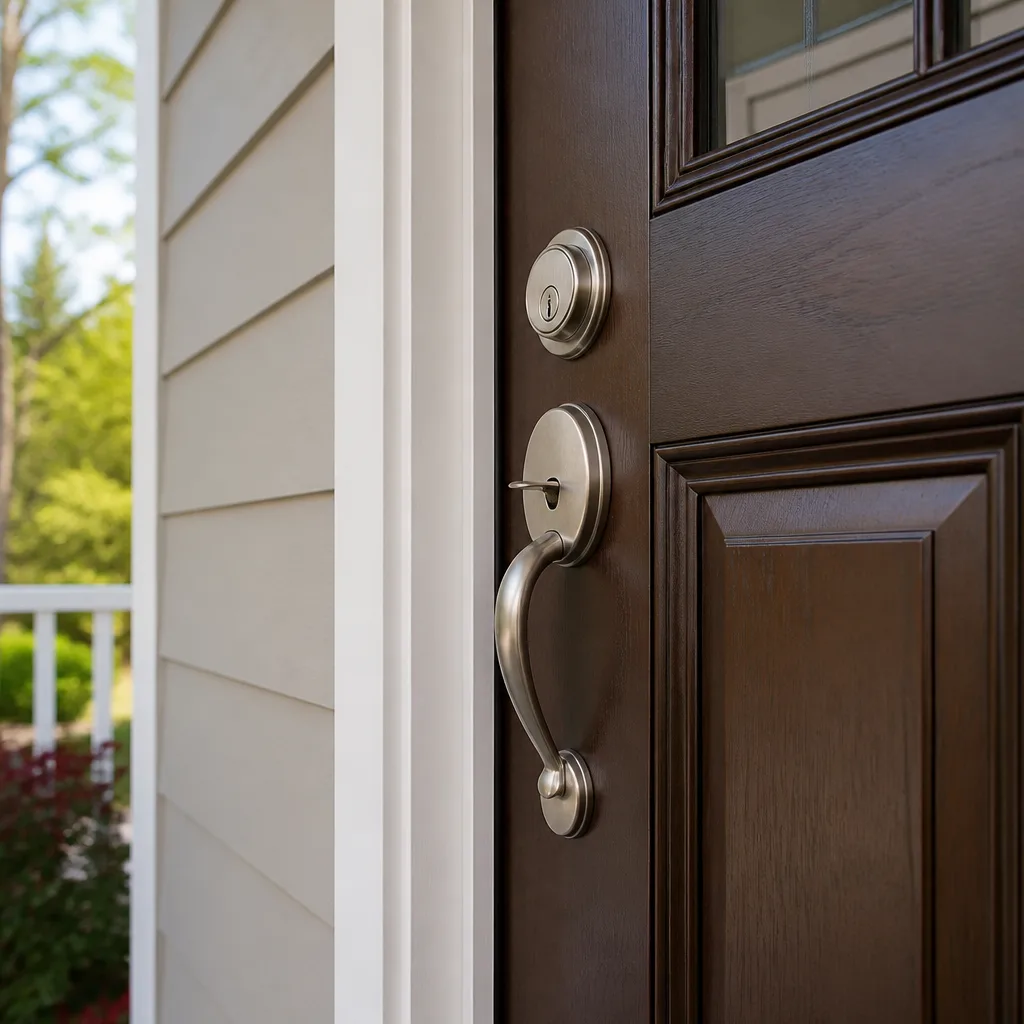
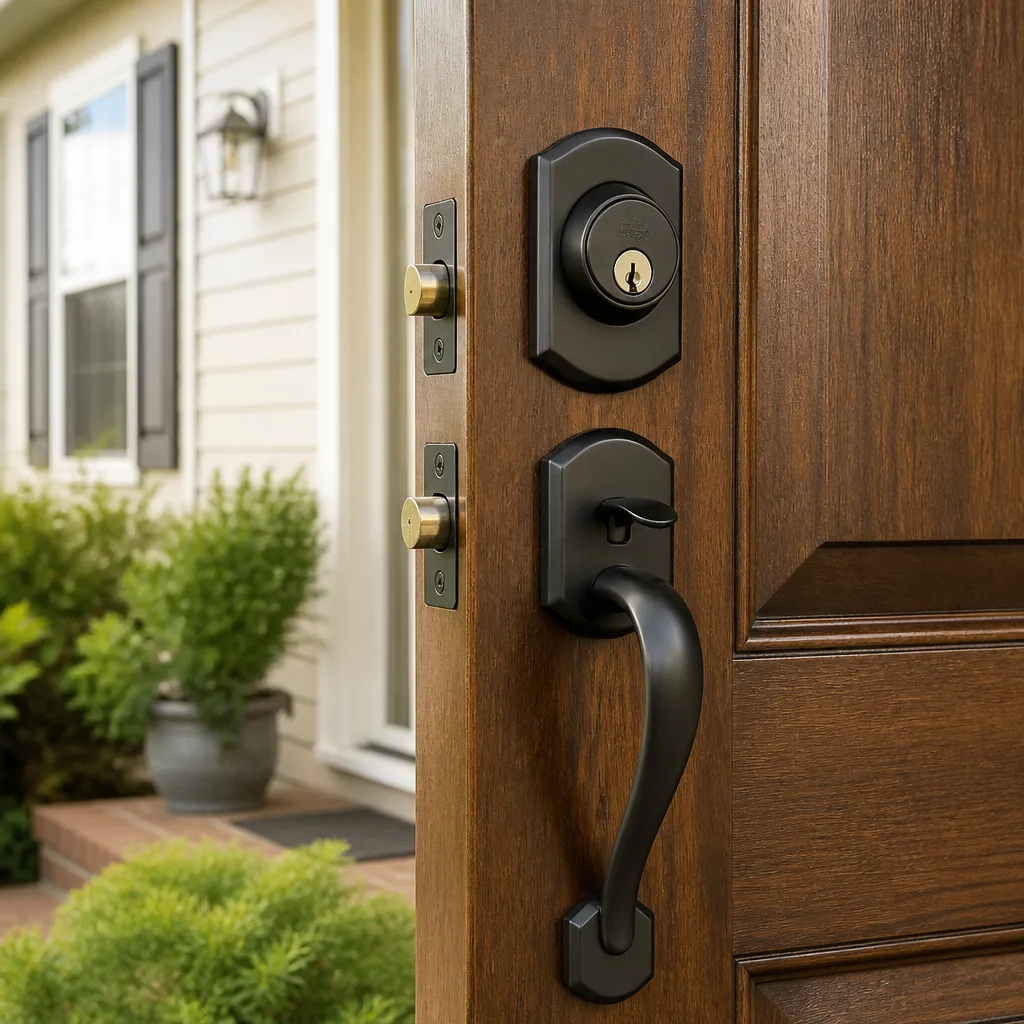
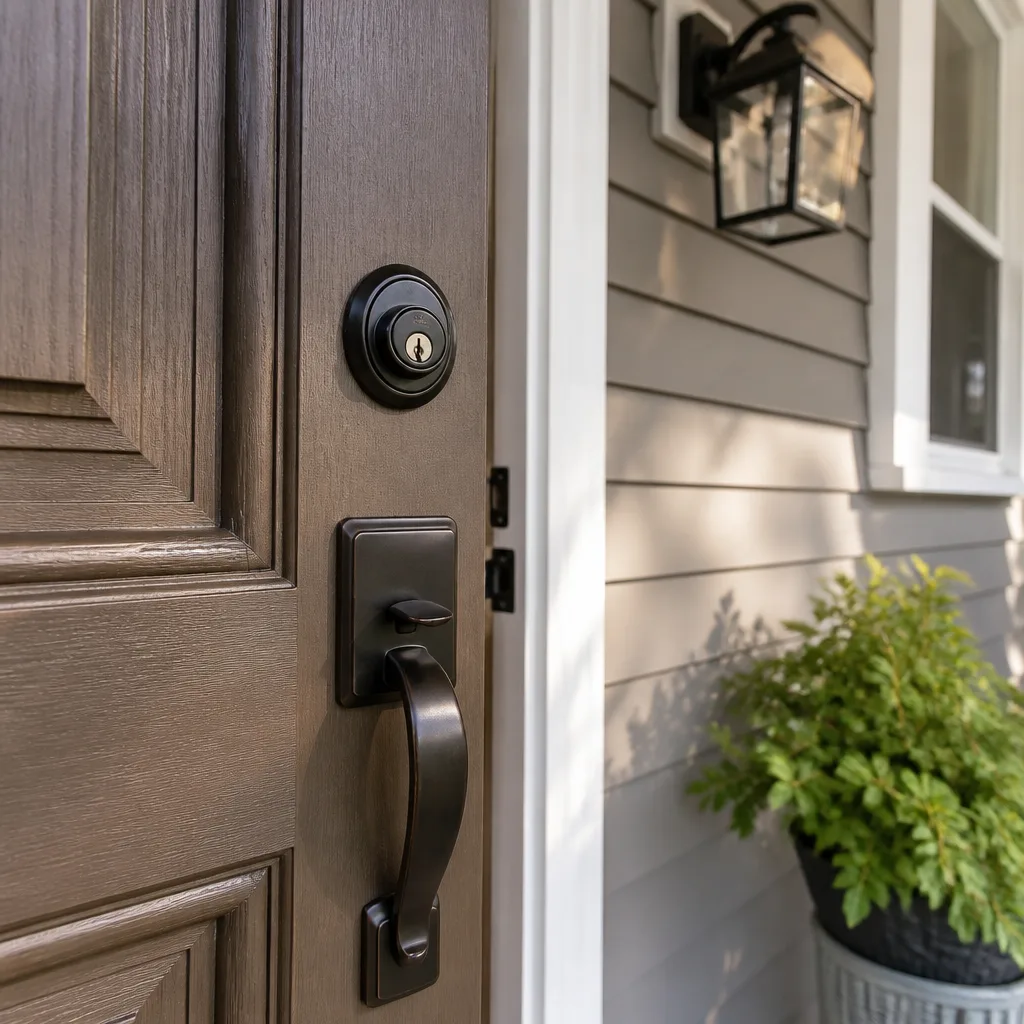
Lock Won’t Turn: What’s Happening
A lock that won’t turn almost always means one of three things: the key has worn past the point where it can lift the pins to the shear line, the cylinder itself has debris or corrosion binding the plug, or the bolt is under mechanical pressure because the door is misaligned and the latch is fighting the strike plate. Any one of these is diagnosable before a technician arrives, and none of them requires forcing anything.
The important word there is “forcing.” A lock cylinder is a precision stack of springs, drivers, and pins machined to tolerances measured in thousandths of an inch. Applying torque when something is bound doesn’t free it – it shears the key, damages the cylinder, or bends the cam that drives the deadbolt. The right move is to figure out which cause you are dealing with, then act accordingly. The four causes below cover the vast majority of what your local Novak Lock & Security team sees on a service call for this exact symptom.
Why It Happens
Worn or Damaged Key
Keys cut from brass wear down with use, and a key that has been copied two or three generations away from the original can be just far enough off-spec to fail on a cold morning or after the lock has been rekeyed once. Hold your key under a light and look at the peaks and valleys of the blade: if the peaks look flat or rounded rather than sharp, the key is probably the problem. Try a different copy if you have one – if the lock turns freely with the second key, the first key is worn out.
Debris, Dry Lubricant, or Corrosion Inside the Cylinder
Lock cylinders are not sealed. Over months and years, graphite dust, dried lubricant residue, grit, and in humid climates light surface corrosion accumulate inside the plug and bind the pin stacks. The tell is a lock that worked fine yesterday and today either sticks partway or won’t turn at all, with no obvious change to the key or the door. You may also feel gritty resistance rather than a smooth stop – that texture means debris, not a broken part.
Door Misalignment Putting Load on the Bolt
This one is easy to spot: insert the key, apply light turning pressure, and simultaneously lift or push the door slightly. If the lock suddenly turns, the door has dropped or shifted until the latch bolt is pressing hard against the inside wall of the strike plate opening – the cylinder is fine, but the bolt can’t travel freely under that load. Wooden doors swell seasonally with humidity. Steel doors can sag at the hinges. Either condition puts the same mechanical stress on the lock mechanism.
Internal Cylinder Failure
Springs inside a lock cylinder fatigue over time. A spring-loaded driver pin that has lost tension will drop to a position where it bridges the shear line and locks the plug solid regardless of the key position. You may notice the key inserts fully and turns a few degrees, then stops hard rather than stopping soft – that hard stop with a correctly cut key in place usually points to a broken or collapsed spring inside the cylinder rather than a surface issue. This one doesn’t self-resolve and isn’t something to probe from outside.
What to Do Right Now
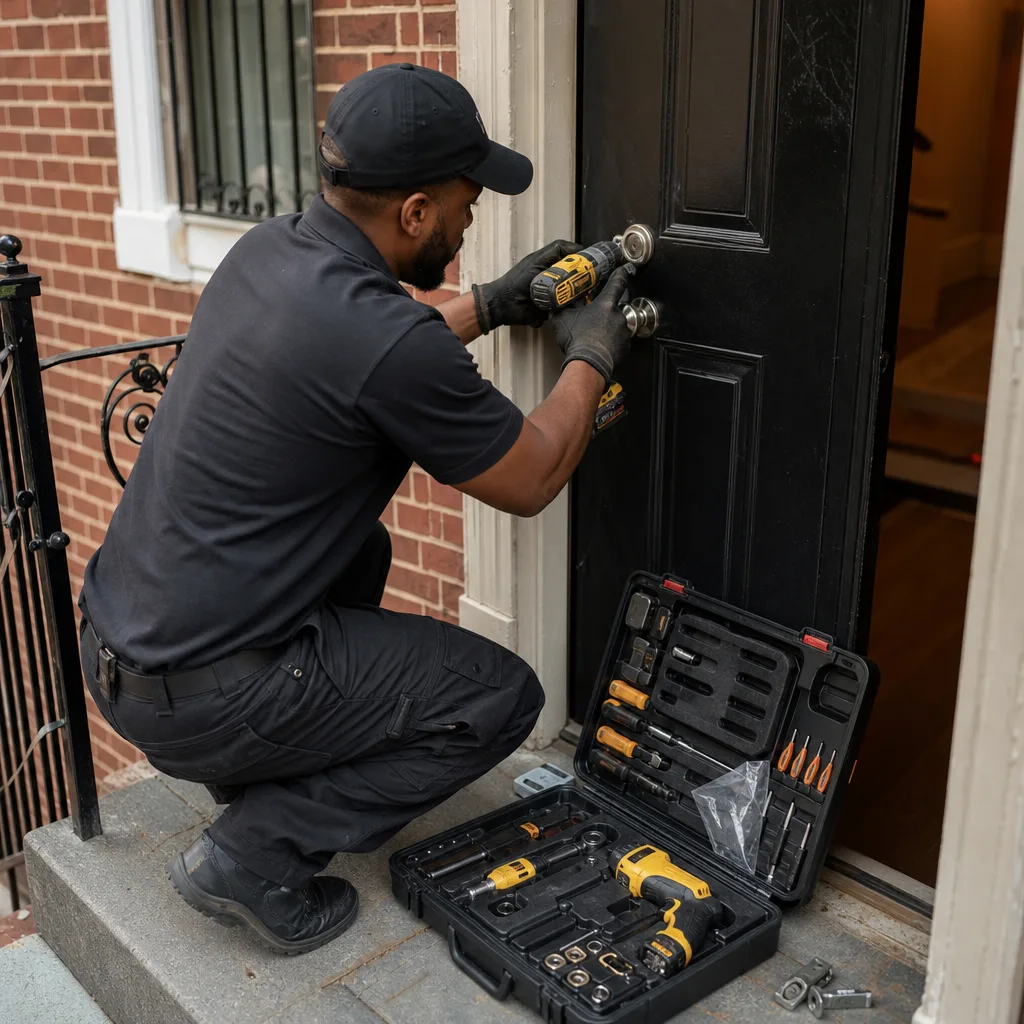
- Stop applying force. If you have already tried the key and it didn’t turn, applying more torque will not change that. It will, however, break the key off in the cylinder – which turns a simple service call into a more involved one.
- Try a second key if you have one. A spare cut from the original (not a copy of a copy) eliminates key wear as the cause in about 30 seconds. If the second key works, the first key is the problem.
- Check the door itself. With the key inserted, try gently lifting the door handle while turning. Try pushing the door slightly inward. If either move helps, you’re dealing with door misalignment pressing the bolt into the strike plate – not a lock defect.
- Don’t spray WD-40 into the cylinder. It is a water displacer, not a lock lubricant, and it leaves a residue that attracts the exact debris that caused the binding in the first place. If you have dry graphite lubricant or a dedicated lock lubricant, a small amount applied to the key blade is appropriate. If you don’t have the right product, leave it alone.
- Photograph what you can see. A photo of the key, the cylinder face, and the door gap at the strike plate takes 60 seconds and gives your technician useful information before they arrive – your local Novak Lock & Security team documents every visit with photos as a standard procedure, and starting that record early helps.
How We Fix It
When your local Novak Lock & Security technician arrives, the first thing they do is assess before they touch anything. They’ll inspect the key, the cylinder face, and the door alignment, and they’ll give you a written price for the repair before any work starts – that’s not a formality, it’s Clause 1 of the Haven Standard and has been the rule here since 2002.
If it’s key wear, we cut a new key from the original code or re-measure and cut to the lock directly. If it’s a dirty or dry cylinder, we disassemble, clean, and re-lubricate it with the correct product. If the door has shifted, we adjust the strike plate or hinges to bring the bolt back into alignment. If the cylinder itself has failed internally, we rekey or replace it – and we’ll tell you plainly whether a repair or a replacement is the smarter call for the hardware you have.
Most of these repairs take under an hour. All of them fall under our Lock Installation & Rekey and Emergency Locksmith services, and every one is backed by the 365-Day Done Right Promise: if it’s not right, we make it right.
Frequently Asked Questions
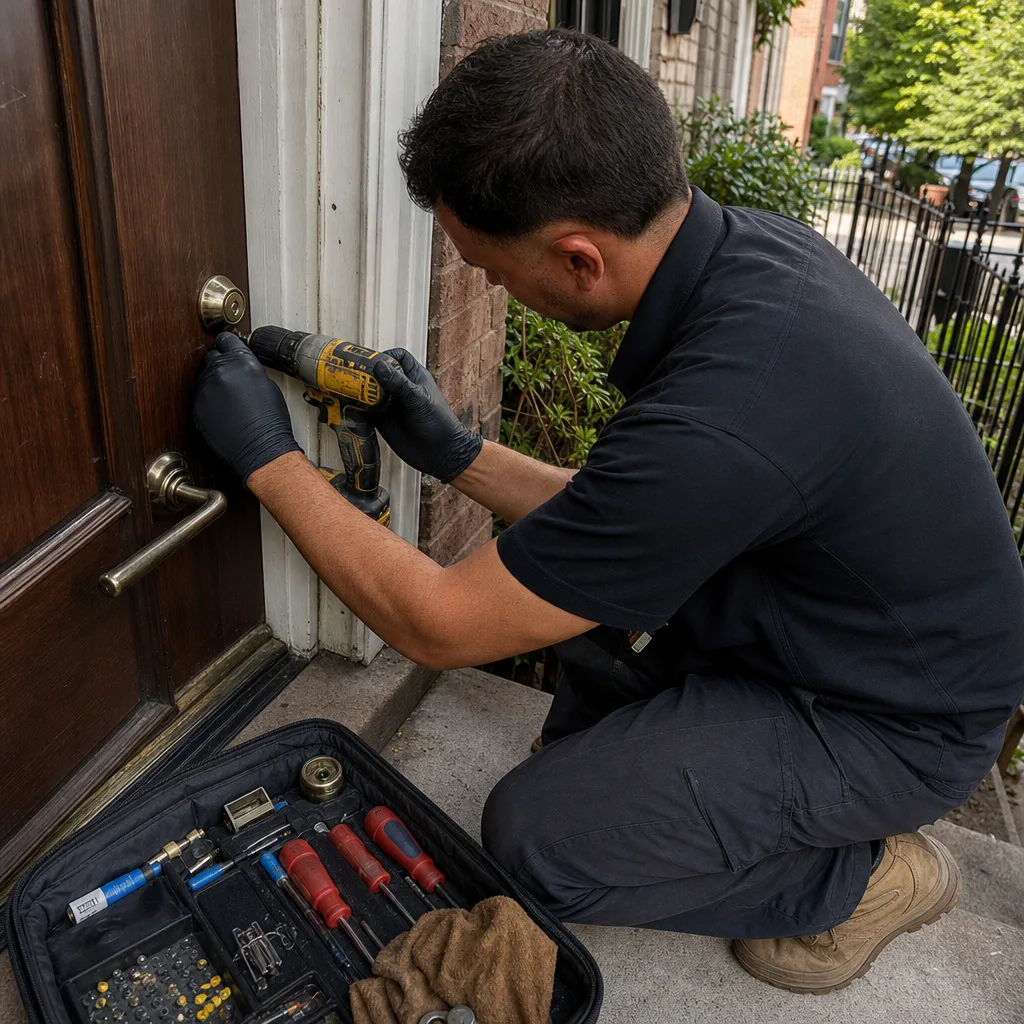
It depends on which lock. A secondary interior lock binding is inconvenient – a deadbolt that won’t fully engage is a security gap, because a bolt that doesn’t seat completely can often be bypassed without tools. If the lock in question is on an exterior door and you can’t confirm the bolt is fully thrown and seated in the strike plate, don’t leave it overnight. Call (331) 310-8471 and describe what you’re seeing – a live person will answer and help you determine how urgent the situation actually is.
Yes. Calls to Novak Lock & Security are answered by a live person around the clock, and your local team handles same-day service for exactly this kind of call. When you call (331) 310-8471, the dispatcher will give you a service window and a firm price before anyone is sent – no automated callback system, no waiting to find out if the slot is available.
The honest answer is that the cost depends on what we find: a worn key is a different job than a failed cylinder, and a cylinder replacement on a Medeco is priced differently than one on a Schlage entry-grade lock. What we can promise is this – the dispatcher quotes a firm price on the phone before we dispatch anyone, and the technician is not permitted to change that number at the door. The price you heard is the price on the invoice. Call (331) 310-8471 to get your written estimate – there’s no charge for the quote.
Not necessarily. Lubrication fixes binding caused by dry or dirty pin stacks, but it won’t fix a worn key, a misaligned door, or a broken spring inside the cylinder – those require a different approach. A technician can identify the actual cause in a few minutes, and many of these repairs preserve the existing cylinder entirely. If replacement is the right call, we’ll tell you why in plain terms before the work starts, not after.
Get It Fixed
Call (331) 310-8471 right now – a live person answers around the clock, and your local Novak Lock & Security team will give you a firm written price before anyone is dispatched. No voicemail, no callback window, no surprises on the invoice.
Written by Daniel Novak, Owner at Novak Lock & Security, serving communities nationwide since 2002.
What Our Customers Say
"Quoted forty-five on the phone, paid forty-five at the door. I had been burned by a company that quoted nineteen and then wanted three hundred."
- Theresa Q."Rekeyed the whole house after we bought it. He showed me the old pins and explained how many keys had likely been cut over the years."
- Omar J."Honest. Told me the existing deadbolt was good quality and only needed the strike plate reinforcing."
- Sal V.