
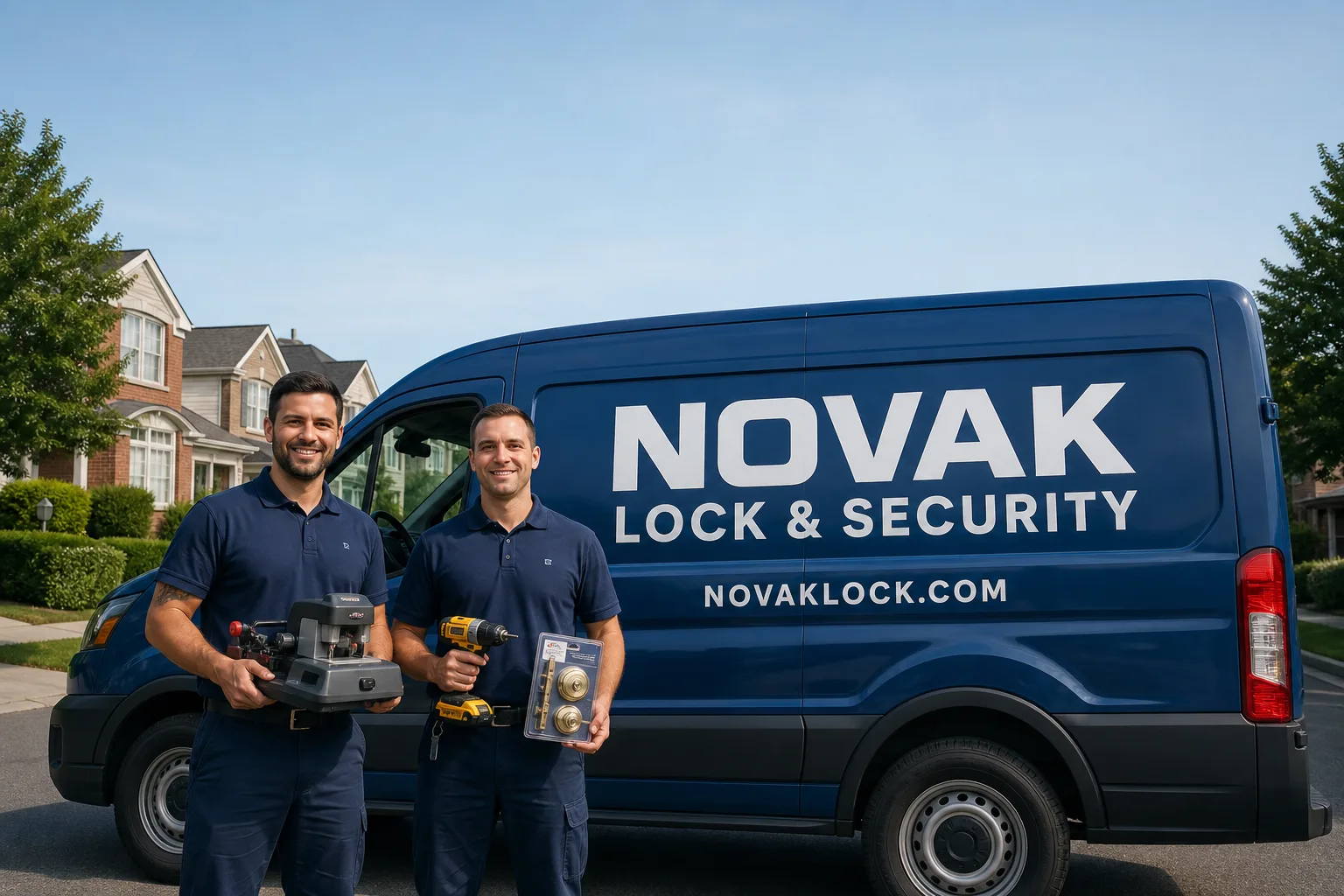
Non-destructive entry first, always - and we re-key Schlage, Kwikset, and Baldwin locks on the spot while you watch
You get a price before we start. It does not change when we arrive. No surprises.
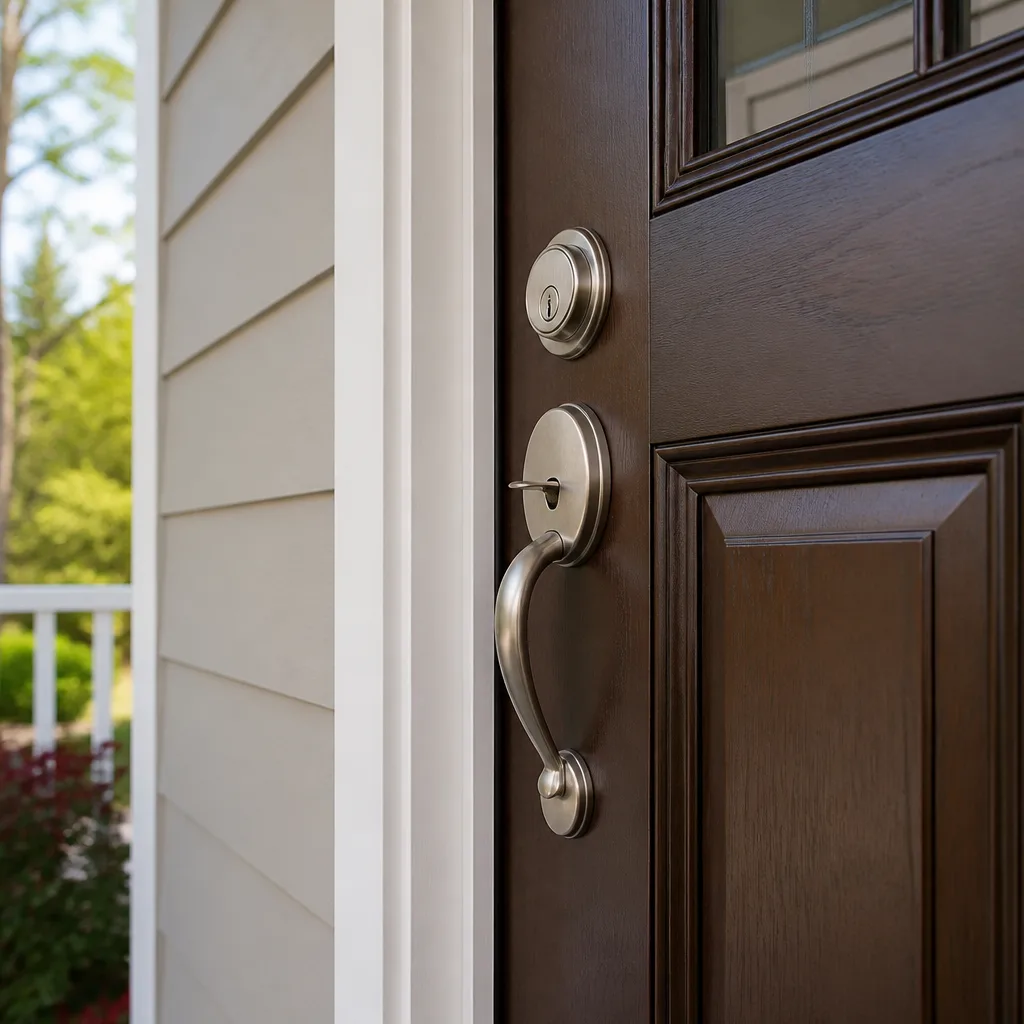
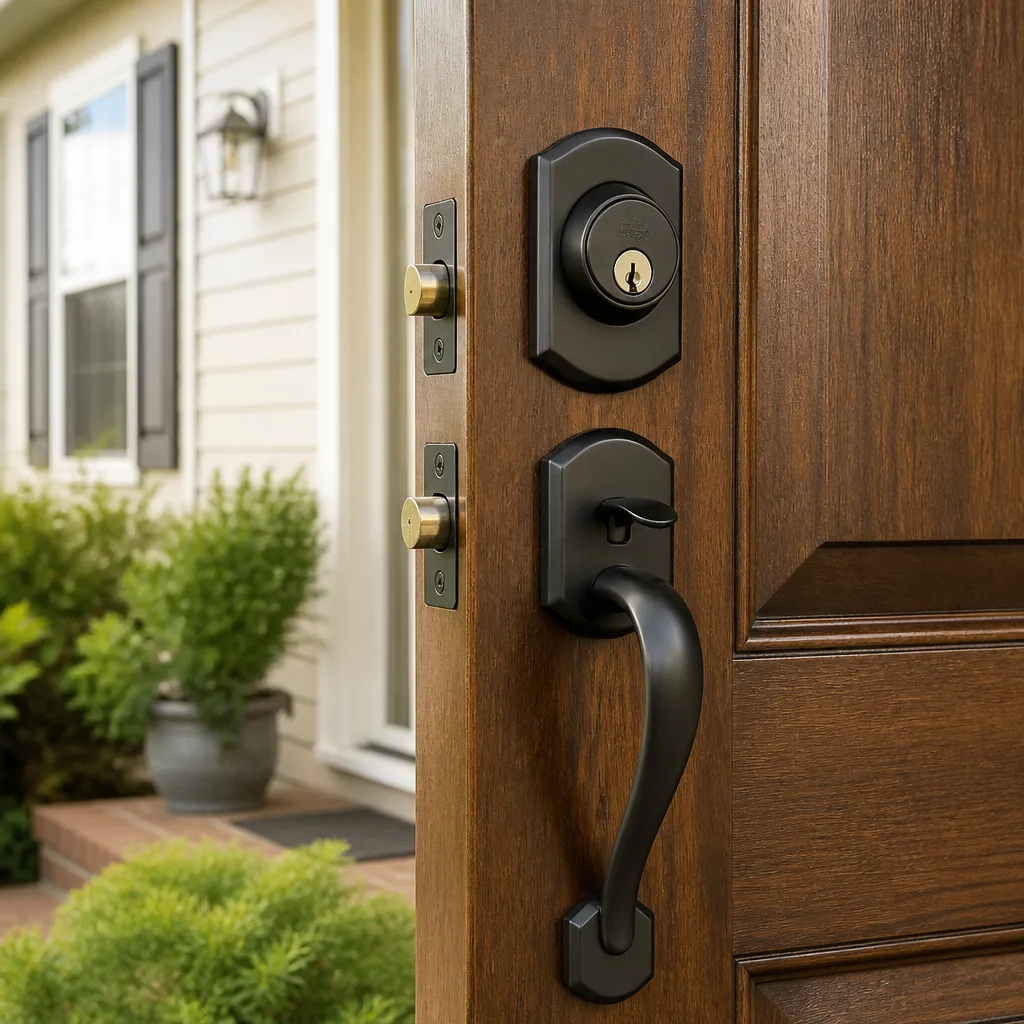
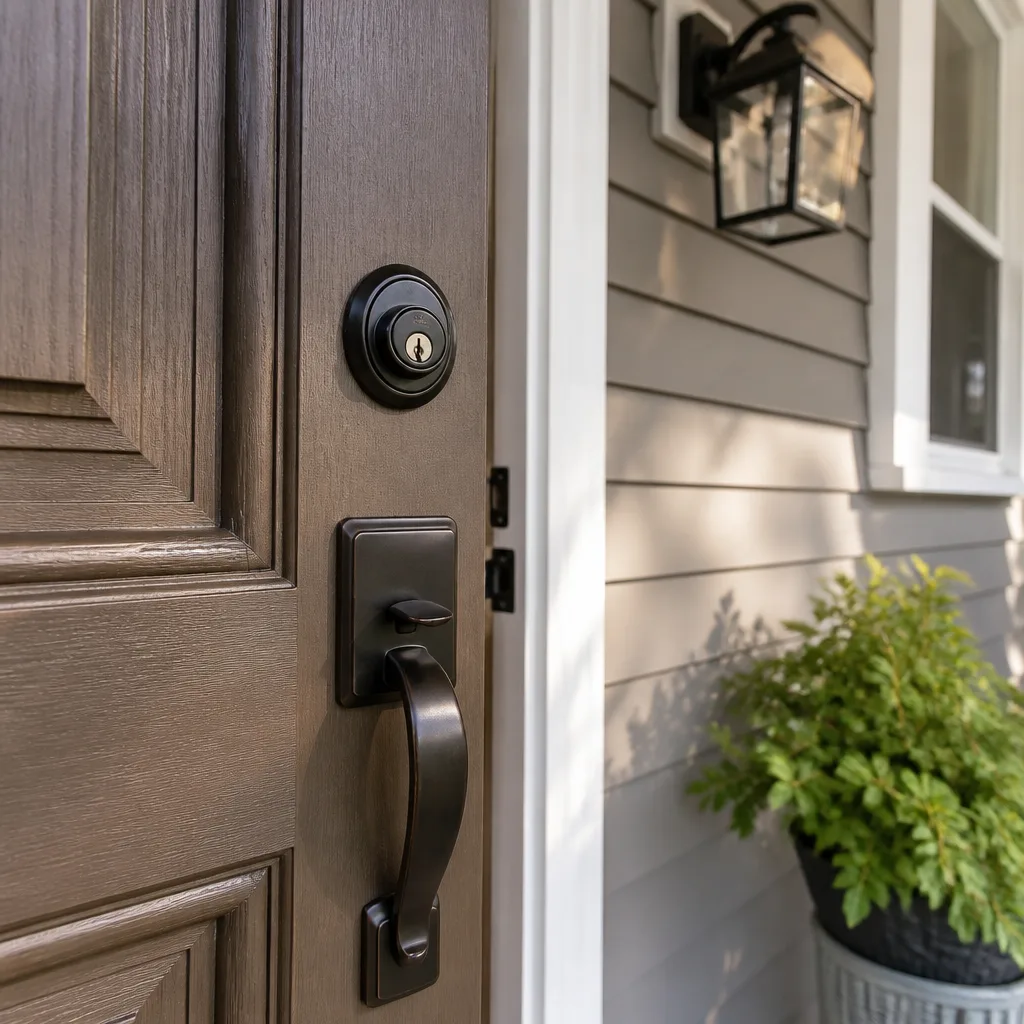
Locked Out of the House
Being locked out of your house almost always means one of three things: a key that no longer works the lock, a lock mechanism that has failed or frozen up, or a door that has latched shut with no key on the outside. Your local Novak Lock & Security team handles all three, typically in a single visit, with a written price quoted before anyone touches the lock.
What’s Happening
A lockout is almost always a mechanical problem, not a mystery. The lock stopped responding to the key, the key is missing or broken, or the door closed behind you without one. Any of those gets you to the same place: standing outside, needing in.
What matters right now is not panicking into a bad decision. Forcing a lock that has seized can damage the cylinder, the door frame, or both, turning a one-hour fix into a full replacement job. The fastest path back inside is usually a trained technician with the right tools – not a credit card, not a bump from a shoulder, and definitely not a screwdriver in the keyhole. Knowing which of the four causes below fits your situation helps your technician arrive prepared, which means the job gets done faster.
Why It Happens
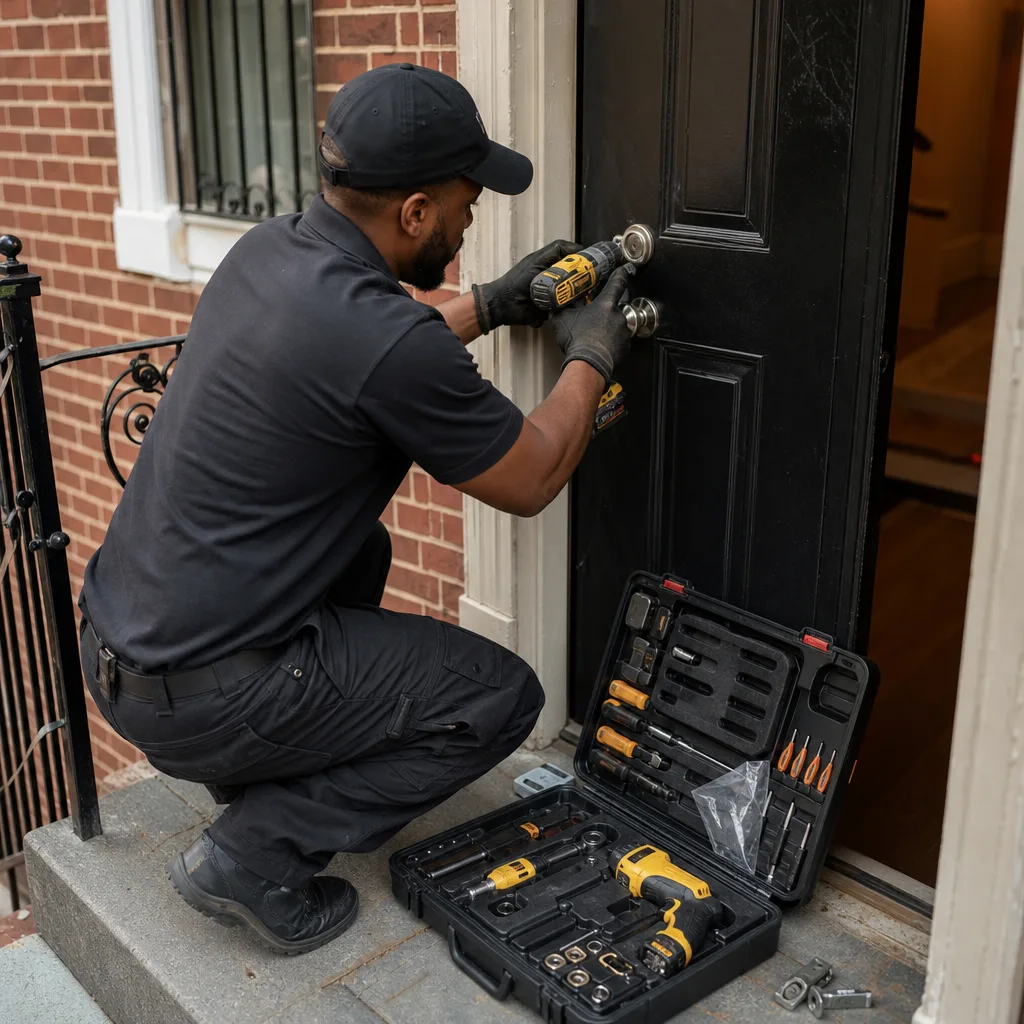
The key is lost, forgotten, or inside the house
This is the most common lockout by a wide margin. The door closed, the key stayed on the kitchen counter, and now you’re outside. The lock itself is fine. A technician can pick or bypass the lock to get you in without any damage, and if you want to rekey the lock afterward – because a lost key is a security risk – that can be done in the same visit.
The key broke inside the cylinder
Keys fail at the bow (the part you grip) or at the blade, and the blade breaking off inside the cylinder is more common than most people expect, especially with older brass keys that have been cut multiple times. You’ll know this is the cause if you can see or feel a fragment lodged in the keyway. Do not try to fish it out with a pair of pliers or push it further in – that nearly always makes extraction harder. A technician uses a purpose-built extractor, and the cylinder is usually salvageable if nothing has been forced.
The lock cylinder has seized or worn out
Cylinders accumulate grit, old lubricant, and wear over years of use. A lock that used to turn stiffly but still worked may have finally reached the point where it won’t turn at all. You can tell this is likely the cause if the key enters the keyway fully but won’t rotate, or if it only rotates partway before stopping hard. Weather plays a role too – temperature swings affect metal tolerances, and a cylinder that binds in summer heat or freezes in winter cold is telling you something about its remaining service life.
The deadbolt or latch has failed mechanically
Sometimes the problem is not the cylinder but the bolt or latch mechanism itself. A deadbolt throw that has bent, a spring-loaded latch that has lost its spring tension, or a strike plate that has shifted can all trap a door shut independently of whether the key turns. If you can hear the cylinder rotate but the door still won’t open, the mechanism behind the face plate is likely the culprit. This is a repair-or-replace call, and the answer depends on the age and condition of the hardware – something your technician will assess on arrival.
What to Do Right Now
- Stop trying to force it. Every attempt to force a seized lock – turning the key harder, using a tool in the keyway, body-slamming the door – risks damaging the cylinder, the bolt mechanism, or the door frame. A clean lockout is a straightforward job. A forced lock is a more expensive one.
- Check every entry point once. Walk around the house. A back door, a garage side door, a window you left cracked – do a single calm pass before calling. If nothing opens, stop there. Don’t climb onto anything or try to access second-floor windows; a fall is a far worse outcome than waiting for a technician.
- If you can see a broken key fragment in the cylinder, photograph it. A clear photo of where the fragment sits helps your technician know what extractor to bring to the door. Don’t touch it after that.
- Have your ID ready. Your technician will verify that you live at the address before any work begins. A driver’s license or piece of mail with the address on it speeds things up and is standard practice on every residential lockout.
- Call (331) 310-8471 and get a written price before anyone is dispatched. The dispatcher will quote you a firm price on the phone. That price does not change when the technician arrives – that rule has been in place since 2002 and is not negotiable on our end.
How We Fix It
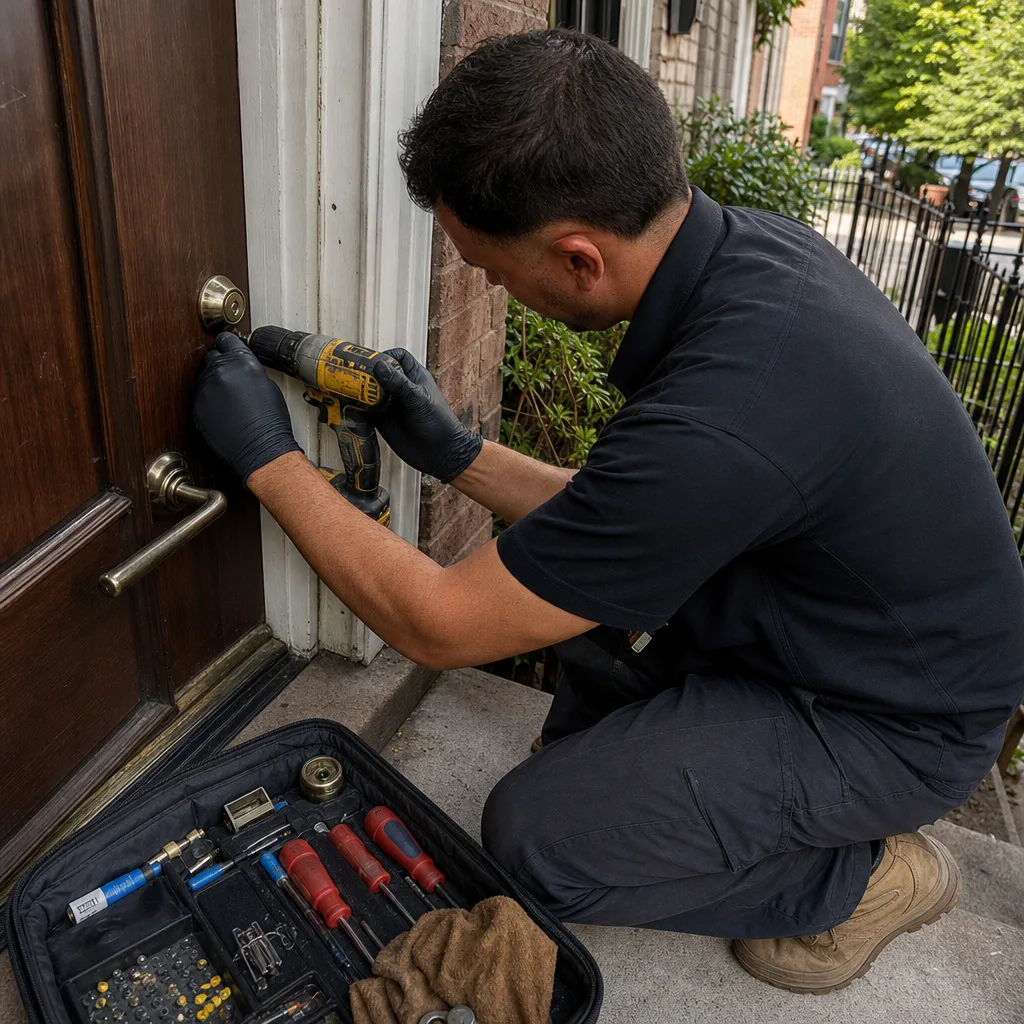
When a Novak Lock & Security technician arrives, the first thing they do is look at what they actually have: the lock brand, the cylinder condition, whether a key fragment is present, and whether the mechanism behind the face plate is intact. They’ll tell you what they found in plain terms before touching anything.
For a straightforward lockout – key left inside, no damage – the service is non-destructive entry, and it’s usually resolved quickly. If a broken key is involved, extraction comes first, followed by a cylinder inspection to confirm it’s still serviceable. If the cylinder or mechanism has failed, the technician carries replacement hardware and can install it on the same visit. Most lockouts resolve as an Emergency Locksmith call, and where rekeying makes sense – because a key was lost rather than left inside – that gets added as Lock Installation & Rekey work in the same visit.
Every job leaves a documented photo record with you at completion. The work is backed by the 365-Day Done Right Promise: if it’s not done right, we make it right.
Frequently Asked Questions
It depends on your situation. If you’re locked out in extreme weather, it’s late at night, you have children or pets inside, or there’s any safety concern at all, treat it as urgent and call now. If you’re locked out on a mild afternoon with somewhere safe to wait, you have a bit more flexibility – but a loose or broken lock is also a security gap, so the sooner it’s resolved, the better. Call (331) 310-8471 and a live person will answer regardless of the hour.
Yes. Calls are answered by a live person around the clock, every day of the year, and your local Novak Lock & Security team handles lockouts as emergency calls. When you call (331) 310-8471, the dispatcher will give you a firm price and confirm availability in your area.
Yes, and this is worth being direct about because the locksmith trade has a real bait-and-switch problem. The dispatcher quotes a firm price, and the technician is not permitted to change it at the door – that rule has been in place since 2002 and is the foundation the business was built on. The price on the phone is the price on the invoice, with no call-out fee added on arrival.
Not if it can be avoided, and in most residential lockouts it can be. Non-destructive entry is the standard approach: the goal is to get you inside with the lock and door frame intact. If something is already damaged or the lock has mechanically failed beyond what entry methods can address, your technician will tell you what they found and what the options are before any additional work begins.
Get It Fixed
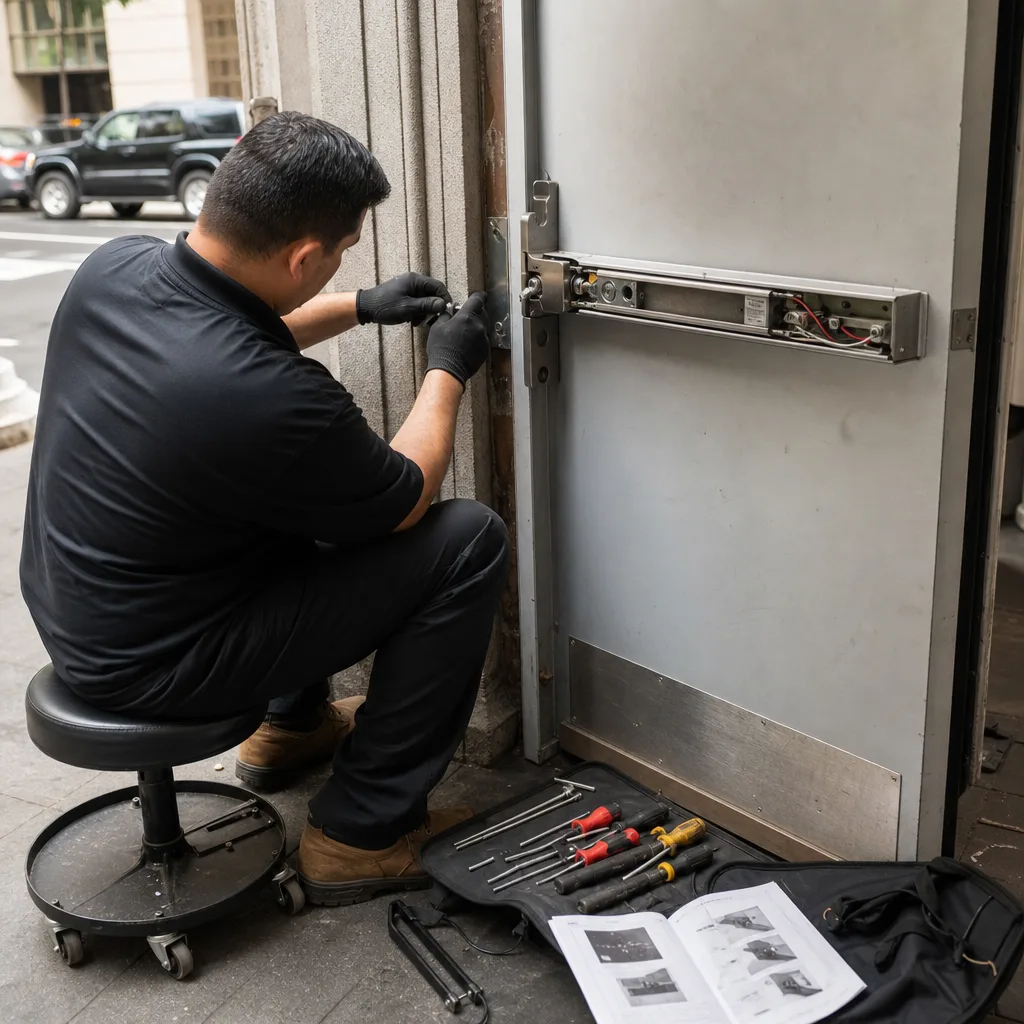
Call (331) 310-8471 right now – a live person answers every call, day or night. Your local Novak Lock & Security team will quote a firm written price on the phone and get a background-checked, uniformed technician on the way. You can also book online if you prefer.
Written by Daniel Novak, Owner at Novak Lock & Security, serving communities nationwide since 2002.
What Our Customers Say
"Fast, polite, and carried identification without being asked. Would use again."
- Grant W."Locked out at eleven at night. A person answered, gave me a time and a name, and both were right."
- Franklin D."Quoted forty-five on the phone, paid forty-five at the door. I had been burned by a company that quoted nineteen and then wanted three hundred."
- Theresa Q.